
People sometimes ask how a game starts, and the honest answer is that it starts as a drawing. Not a rules document, not a spreadsheet. A drawing in one of Rūta’s sketchbooks, usually of something that is not a game yet: a lighthouse, a tram, a comet with a long tail.
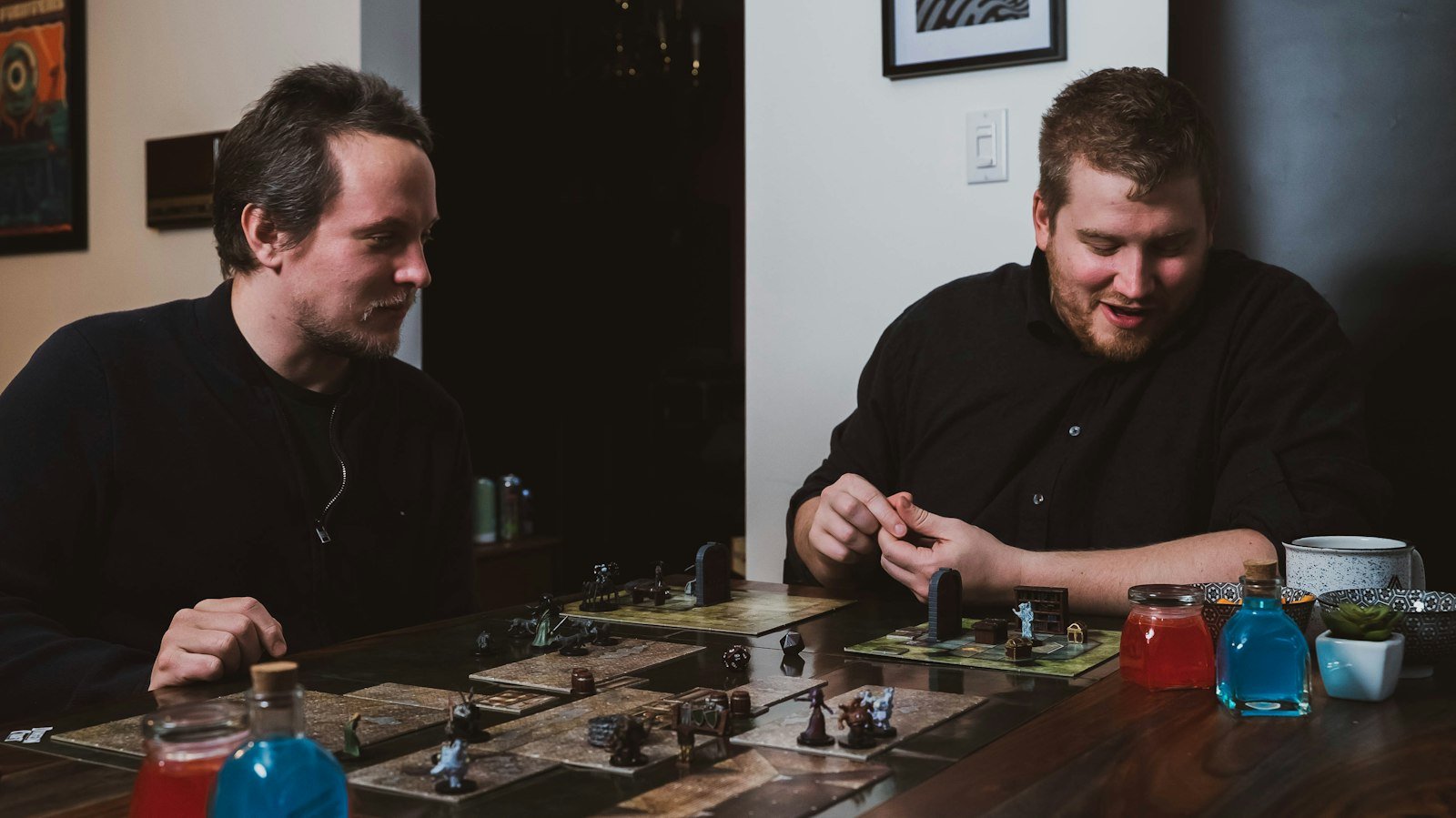
Step one is to draw it until it wants rules. A sketch sits on the wall for a while. If it keeps asking questions (what does the tail do? why is the tram late?) it gets promoted to the kitchen table. Tomas writes down the first rules on a single page; if they do not fit on one page, the idea is not ready. We play that first version with coins, buttons and whatever dice are nearest. Most ideas die here, cheerfully.
Step two: the ugly print-and-play
The ones that survive get a print-and-play version. Rūta draws placeholder art in an afternoon, and we print it on the office printer at the back of the studio, cut it with a knife and a steel ruler, and sleeve the cards in whatever we have. This is the version that goes out to friends and to the first play-test night. It is ugly on purpose. Nice art makes people polite, and polite people do not tell you your game is broken.
Step three: count to thirty
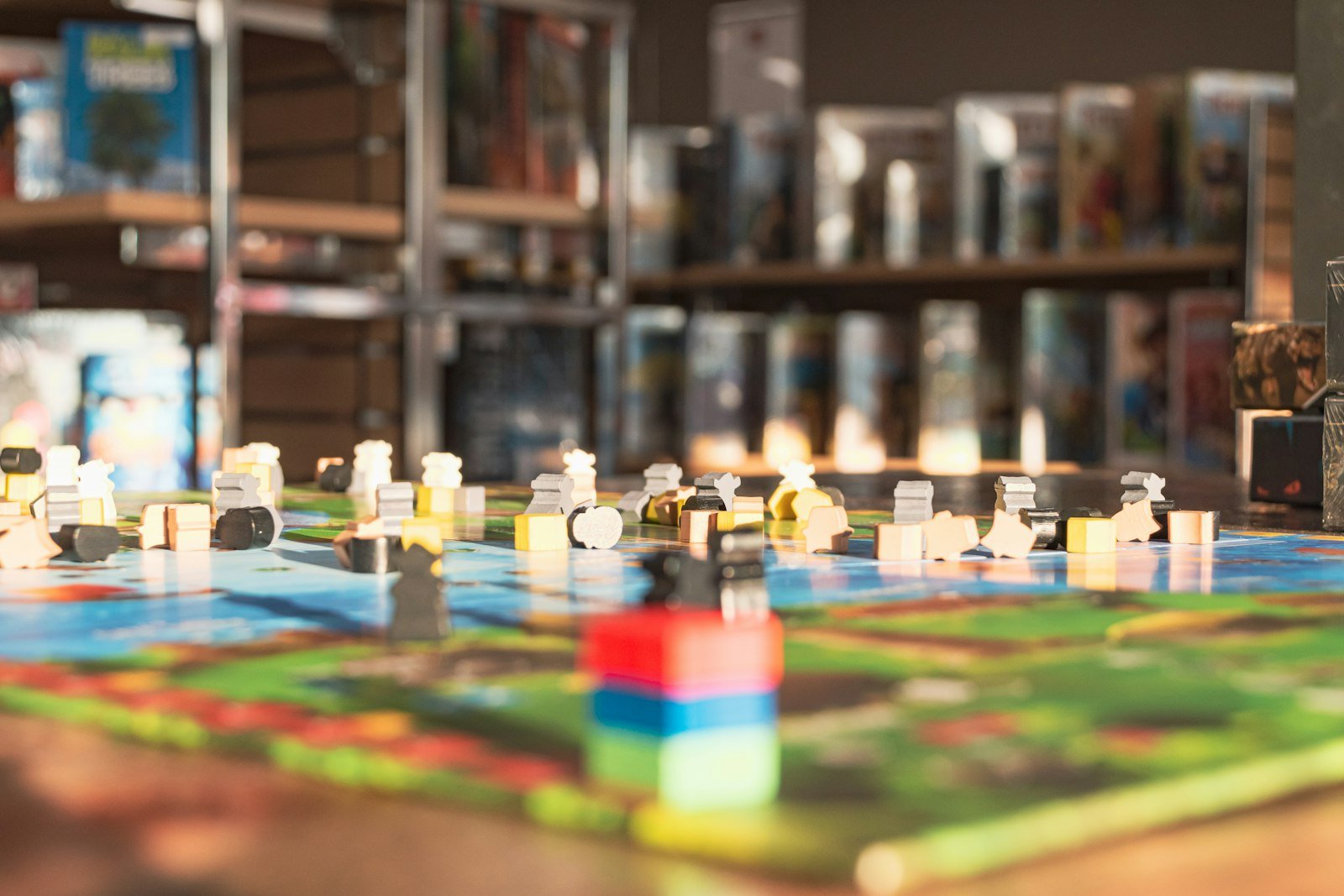
From here on we count play-tests, and nothing gets a real print run until it has been played thirty times by people who are not us. That rule has its own post. Along the way the components get real one piece at a time: wooden discs replace coins, a proper board replaces the taped-together sheets, and the art goes from placeholder to final only after the rules have stopped moving.
That is the first half. The second half, with the print shop and the box factory, is where things get expensive and interesting, and it will get its own post when we have survived it.